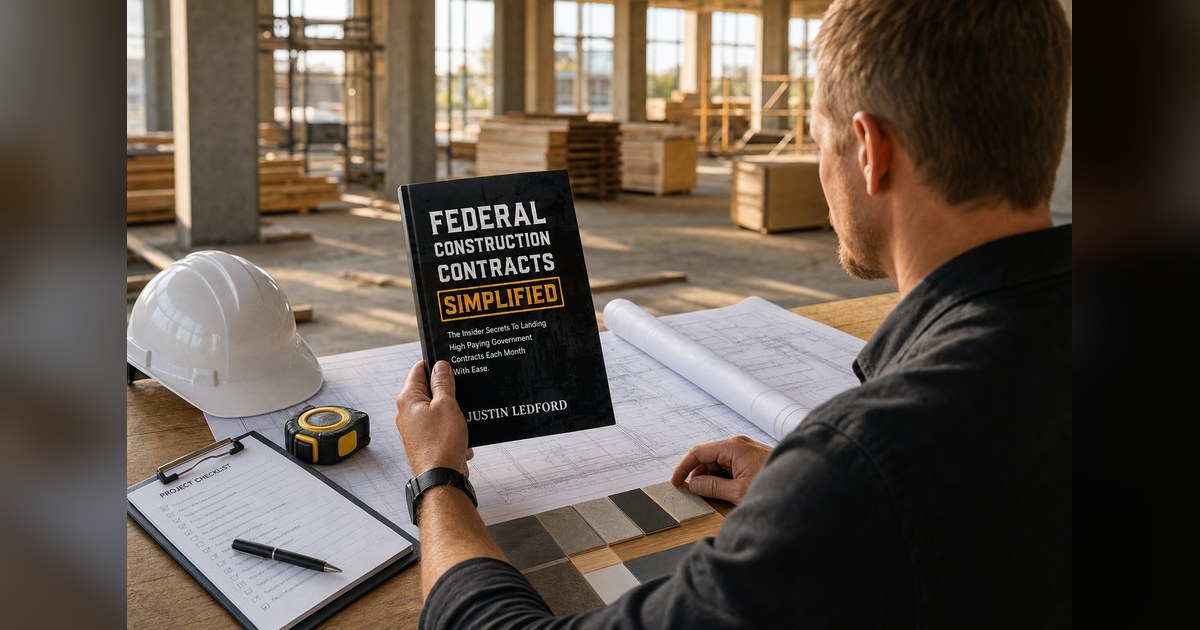
Federal Construction Contracts, Simplified for Beginners
Key Takeaways
- Federal construction contracts sound intimidating, but the process is a system anyone can learn once the jargon is decoded.
- The federal government is the largest construction buyer in the country, and much of that work is reserved for small businesses.
- The biggest barrier for beginners isn't skill — it's the unfamiliar terms, registrations, and steps.
- Learn the vocabulary and the sequence, and a whole new pipeline of steady, well-funded work opens up.
- Federal Construction Contracts Simplified breaks the whole process down in plain English for first-timers.
For most contractors, federal construction contracts feel like a walled garden — full of acronyms, registrations, and rules that seem designed to keep newcomers out. But that "complexity" is mostly unfamiliar vocabulary. Once you learn what the terms mean and the order to do things in, bidding on government work becomes a repeatable process. Here's a plain-English breakdown for beginners, and where to get the full simplified guide.
What Are Federal Construction Contracts, Really?
Federal construction contracts are simply agreements to build, renovate, or repair facilities for the federal government — and they're awarded through a public, structured process. The work itself is the construction you already know how to do; the difference is the buyer and the paperwork. Because the government is a dependable payer with enormous, year-round demand, these contracts offer a stability that private jobs rarely match.
The reason they feel hard is that the process has its own language and steps. Decode those, and the "complicated" reputation falls apart.
Why Does Federal Contracting Seem So Complicated?
It seems complicated because it's wrapped in unfamiliar terms and required registrations, not because the underlying work is hard. New contractors hit a wall of acronyms — UEI, NAICS, set-asides, solicitations — and assume the whole thing is beyond them. In reality, each term maps to a simple concept, and each step happens in a predictable order. The contractors who win aren't insiders; they just took the time to learn the vocabulary.
Common Federal Contract Terms, Decoded
Learning a handful of terms removes most of the intimidation. Here are the ones beginners run into first:
| Term | What it actually means |
|---|---|
| SAM.gov | The official site where you register and find opportunities |
| UEI | Your unique ID for doing business with the government |
| NAICS code | The code that classifies the kind of work you do |
| Set-aside | Work reserved for small or disadvantaged businesses |
| Solicitation | The posted opportunity with all the bid requirements |
What's the Beginner's Path Into Federal Work?
The beginner's path is a clear sequence, not a leap. Follow it in order and you avoid the mistakes that trip up first-timers:
1. Register in SAM.gov and get your UEI.
2. Set your NAICS codes so agencies find you for the right work.
3. Check which SBA certifications you qualify for.
4. Find matching solicitations and read them closely.
5. Submit a complete, compliant bid before the deadline.
Do this once and you've built a skill you can use for the rest of your business's life.
Why Learn From a Simplified Guide Instead of Figuring It Out Alone?
Because trial-and-error in federal contracting is slow and expensive, and one missed requirement can cost you a bid you'd have won. A guide written in plain English shortcuts the learning curve — you skip the confusion and the costly mistakes and get straight to bidding. For a first-timer, that's the difference between giving up after one frustrating attempt and landing your first contract.
How Much Can Federal Construction Contracts Be Worth?
Federal construction contracts range from small, straightforward jobs perfect for first-timers to large multi-year projects worth serious money. That range is good news for beginners: you don't have to chase a massive contract out of the gate. You start with smaller opportunities that fit your capacity, build a track record of successful performance, and use those wins to qualify for bigger work. Because the government awards a steady stream of construction contracts every single day across every region, there's consistent opportunity at every size — the key is starting where you fit and growing from there. That predictable, year-round demand is exactly why federal work can stabilize a business that used to ride the ups and downs of private jobs.
Do You Need Special Bonding or Licensing?
Federal construction work does come with requirements like bonding and proper licensing, but they're standard hurdles — not roadblocks — and a good guide walks you through exactly what you need for the contracts you're targeting. Knowing these requirements up front keeps you from wasting time bidding on work you're not yet set up to win, and helps you get set up correctly before you submit your first bid. None of it is beyond a capable contractor; it's just part of the process, and it's far less daunting once someone lays it out in order.
Make Federal Construction Contracts Simple
You don't need a law degree to win government work — you need the process decoded and put in order. If you're ready to stop feeling locked out and start bidding, Federal Construction Contracts Simplified breaks the entire process down step by step, in plain language, for beginners. Get your copy at https://federalconstructioncontractssimplified.com and turn federal construction contracts from intimidating to income.